

NEWS
The Role of Industrial Sieving Machines in Pharmaceutical Manufacturing
Dec 20,2025
The Role of Industrial Sieving Machines in Pharmaceutical Manufacturing
Table of Contents
- 1. Introduction to Industrial Sieving Machines
- 2. Importance of Sieving in Pharmaceutical Production
- 3. Types of Sieving Machines Used in Pharmaceuticals
- 4. Applications of Sieving Machines in Pharma Manufacturing
- 5. Benefits of Using Industrial Sieving Machines
- 6. Compliance and Quality Assurance
- 7. The Future of Sieving Technology in Pharmaceuticals
- 8. Frequently Asked Questions
- 9. Conclusion
1. Introduction to Industrial Sieving Machines
In the pharmaceutical industry, maintaining product quality and safety is paramount. Industrial sieving machines play a crucial role in ensuring that raw materials and finished products meet the stringent requirements set by regulatory authorities. These machines are designed to separate particles based on size, ensuring uniformity and purity in pharmaceutical formulations. Their significance extends beyond simple screening; they are integral to achieving operational efficiency and compliance within the manufacturing process.
2. Importance of Sieving in Pharmaceutical Production
Sieving is a vital process in pharmaceutical manufacturing, as it directly impacts the quality of the final product. The primary reasons why sieving is essential in this sector include:
2.1 Ensuring Consistency and Quality
Using sieving machines helps maintain consistent particle sizes, which is crucial for dosage accuracy and effectiveness. Variations in particle size can lead to inconsistent drug delivery, affecting efficacy and safety.
2.2 Enhancing Solubility and Bioavailability
Uniform particle sizes improve the solubility of active pharmaceutical ingredients (APIs), enhancing their bioavailability. This is particularly important for drugs that require rapid absorption into the bloodstream.
2.3 Eliminating Contaminants
Sieving processes help remove foreign particles and contaminants from raw materials, protecting the integrity of the pharmaceutical products. This step is vital for ensuring compliance with Good Manufacturing Practices (GMP).
3. Types of Sieving Machines Used in Pharmaceuticals
Various types of industrial sieving machines are employed in pharmaceutical manufacturing, each tailored for specific applications and material properties.
3.1 Vibratory Sieving Machines
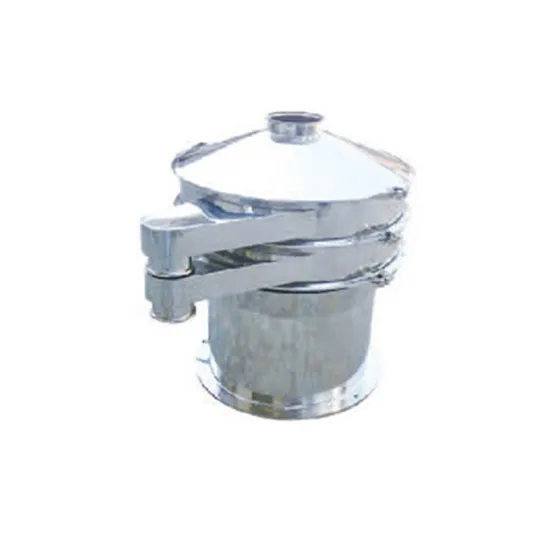
Vibratory sieving machines utilize vibrations to facilitate the movement of particles through the sieve mesh. The design allows for efficient separation of fine powders from larger particles, making them ideal for granulation and powder coatings.
3.2 Centrifugal Sieving Machines
Centrifugal sieving machines leverage centrifugal force to separate materials based on density and size. They are particularly effective for separating powders with different particle sizes and are often used in the production of granules and tablets.
3.3 Air Jet Sieving Machines
Air jet sieving machines use high-velocity air to propel particles through a mesh screen. This technology efficiently removes agglomerates and ensures that only particles of the desired size are passed through, making it suitable for fine powders used in pharmaceuticals.
4. Applications of Sieving Machines in Pharma Manufacturing
Industrial sieving machines find a wide range of applications in pharmaceutical manufacturing processes.
4.1 Raw Material Preparation
Before processing, raw materials must be sieved to remove impurities and ensure uniformity. This is essential for maintaining product quality and achieving precise dosage forms.
4.2 Granulation
In granulation, sieving machines are used to control the size of granules, which is critical for the subsequent tableting process. Uniform granule size ensures consistent flow properties and tablet hardness.
4.3 Final Product Inspection
After packaging, final products are often subjected to sieving to ensure that no foreign particles are present. This final check helps maintain product integrity and adherence to regulatory standards.
5. Benefits of Using Industrial Sieving Machines
The use of industrial sieving machines in pharmaceutical manufacturing offers several advantages:
5.1 Improved Efficiency
Automating the sieving process significantly reduces manual labor and processing time, leading to increased operational efficiency.
5.2 Enhanced Product Quality
By ensuring uniform particle sizes and eliminating contaminants, these machines directly contribute to the production of high-quality pharmaceutical products.
5.3 Cost Savings
Improved efficiency and enhanced product quality lead to reduced waste and lower production costs. This makes the overall manufacturing process more economical.
6. Compliance and Quality Assurance
Compliance with regulatory standards is a non-negotiable aspect of pharmaceutical manufacturing. The role of industrial sieving machines extends to ensuring that processes align with GMP and other regulatory requirements.
6.1 Documentation and Traceability
Most modern sieving machines are equipped with data logging capabilities that allow manufacturers to maintain accurate records of the sieving process. This documentation is essential for audits and compliance checks.
6.2 Validation of Processes
Regular validation of sieving machines ensures that they perform optimally and produce consistent results. This validation process is critical for maintaining quality assurance in pharmaceutical manufacturing.
7. The Future of Sieving Technology in Pharmaceuticals
As the pharmaceutical industry continues to evolve, so too does the technology surrounding industrial sieving machines. Advancements in automation, artificial intelligence, and data analytics are expected to drive the future of sieving technology.
7.1 Integration of Smart Technologies
The integration of smart technologies will enable real-time monitoring and control of sieving processes, ensuring optimal performance and immediate detection of anomalies.
7.2 Enhanced Customization
Future sieving machines are likely to offer more customization options, allowing manufacturers to tailor sieving processes to specific material properties and production requirements.
8. Frequently Asked Questions
8.1 What are industrial sieving machines?
Industrial sieving machines are equipment used to separate particles based on size and ensure the quality of raw materials and finished products in various industries, including pharmaceuticals.
8.2 Why is sieving important in pharmaceuticals?
Sieving is crucial in pharmaceuticals for ensuring consistency, eliminating contaminants, and enhancing the solubility and bioavailability of active ingredients.
8.3 What types of sieving machines are commonly used in pharmaceutical manufacturing?
Common types include vibratory sieving machines, centrifugal sieving machines, and air jet sieving machines, each serving specific roles in the manufacturing process.
8.4 How do sieving machines contribute to compliance?
Sieving machines help maintain product quality, provide documentation for audits, and ensure processes comply with Good Manufacturing Practices (GMP).
8.5 What is the future of sieving technology in pharmaceuticals?
The future of sieving technology will likely include smart technologies for real-time monitoring and enhanced customization to meet specific manufacturing requirements.
9. Conclusion
Industrial sieving machines play an indispensable role in pharmaceutical manufacturing, ensuring the quality and consistency of products while enhancing operational efficiency. As the industry continues to advance, these machines will evolve, incorporating new technologies to meet the ever-growing demands for safety, efficacy, and compliance. Embracing the importance of sieving in manufacturing processes not only safeguards product integrity but also contributes to the overall success of pharmaceutical companies in an increasingly competitive market.
More News

Get a Quote

Add:
No. 9, Yungu Road, Zhutang Town, Jiangyin City, Jiangsu Province, China
E-mail: pxjx@jypxjx.com
Copyright ? 2022 香蕉传媒.
| SEO


